Asset Management Software: Track Inventory, Laptops, Tools & Equipment
Lost assets and untracked inventory quietly cost Indian businesses dearly. Here is how asset management software assigns, tracks and audits every item you own.

Key takeaways
- Lost assets and untracked inventory quietly cost Indian businesses dearly. Here is how asset management software assigns, tracks and audits every item you own.
- The Quiet Cost of Untracked Assets
- The Asset Register: One Source of Truth
- Assignments That Follow the Person
- Location & Movement Tracking
Asset management software in India most often earns its keep the day an exit interview asks where the laptop went.
The Quiet Cost of Untracked Assets
Most organisations have no honest answer to a simple question: how many laptops, tools and instruments do we actually own, and who has each one right now? The gap between "we probably have" and "we can account for" is where assets quietly disappear - handed on, lost in a move, or written off twice.
Asset management software closes that gap with a central, living register. Here is what it changes.
The Asset Register: One Source of Truth
Every asset gets a record - serial number, purchase date, cost, category, current custodian, location and status (in service, in repair, retired). Because it is one system, IT, finance and operations all answer from the same book instead of three spreadsheets that disagree.
Assignments That Follow the Person
Each asset is assigned to a custodian. When an employee joins, they get their kit logged; when they leave or transfer, the return is recorded. No more exit interviews followed by "they took the laptop with them" two months later.
Location & Movement Tracking
With asset tags (RFID or barcode), items are scanned in and out of locations or to a custodian. A stocktake that once took a team a weekend now runs as a round with a scanner - and the audit record is automatic.
Maintenance & Lifecycle
Service schedules, warranties and repair history sit on each record. Finance gets the data to depreciate accurately and decide when an asset is costlier to repair than replace.
Why It Matters Now
With hybrid and field work, assets physically leave the building. An asset register that only exists when you do a manual count is not a register - it is a hope. Asset software makes custody a tracked, auditable fact.
Buying Checklist
- [ ] Central asset register with serial and custodian
- [ ] Assignment and return workflow tied to employees
- [ ] RFID/barcode scanning for fast stocktakes
- [ ] Location and status tracking
- [ ] Maintenance and warranty history
- [ ] Depreciation and asset reports
- [ ] Integration with HR for custodian data
Bottom Line
Asset management software turns "we probably own X" into "here is X, and here is who holds it, and here is its service record." That single upgrade pays for itself the first time a lost asset is traced.
MegaMind can pair asset tracking with our RFID readers and HR platform - so custody follows the employee lifecycle automatically. Ask about a combined walkthrough.
Asset records are easier to trust when the employee list behind them is clean, so check how the tool connects to your HRMS software before you buy.
Mistakes That Cost More Than the Software
The two failures we see most in asset tracking are not what people expect. The first is buying the software before fixing the data: the team spends the first month typing serial numbers into a new system and quietly gives up. Start the register in a spreadsheet if you must, but start it - the tool can wait a week, the record cannot.
The second is treating asset software as an IT project when finance and operations both own it. IT buys the tags, accounts wants the depreciation, the field team actually scans. If one department runs it alone, the register goes stale in a quarter and becomes one more abandoned dashboard. Assign one owner, agree the return process, and audit the register twice a year. That discipline is worth more than any feature list.
The Laptop That Left With the Exit Interview
Every IT manager has the story: an employee resigns, the exit interview is pleasant, the laptop is not returned because nobody recorded who had it. Two months later finance asks where it is, and the answer involves an email chain, a clean-desk photo, and a shrug. The laptop is a write-off that could have been a form.
The quiet fix is not better staff - it is a custody record that exists before the exit begins. When every laptop, dongle and tool has a named custodian in the system, the exit checklist is a report, not a hunt. "Return the two assigned items" appears before the last day, not after the invoice. Nine times out of ten, the asset software's first year pays for itself by closing exactly these three loose ends.
Want the short version of every guide like this?
Get practical buying tips, product comparisons and security advice — plus a free consultation when you're ready to compare options.
Related Products — Asset Management Software: Track Inventory, Laptops, Tools &
X990
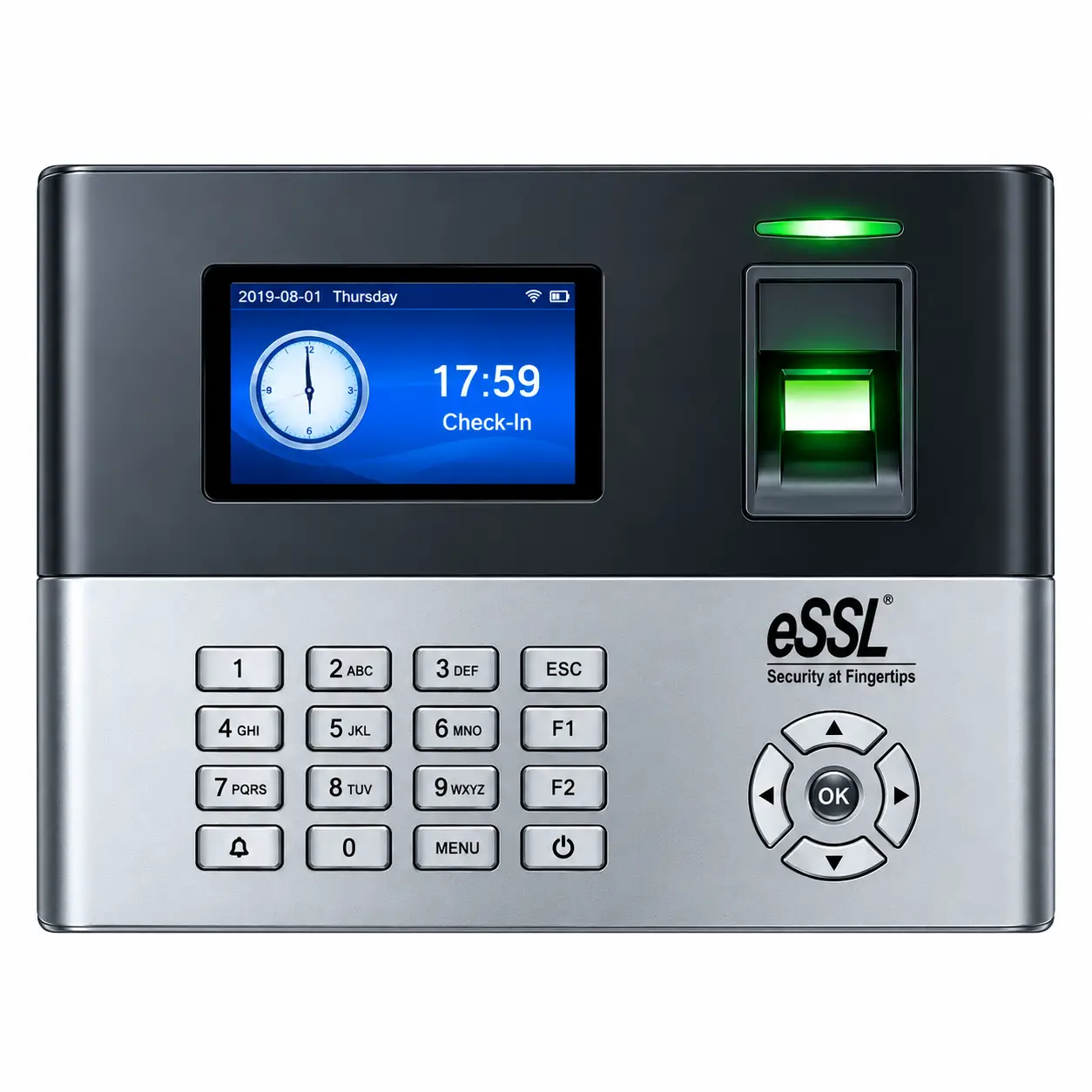
eSSL X990 is a standalone fingerprint time attendance and access control system for employee attendance and controlled entry, with up to 10,000 fingerprints, 10,000 cards and 100,000 transactions, a 500 DPI optical fingerprint sensor and identification speed below 0.5 second
- Fingerprint Capacity10,000
- Card Capacity10,000
- Log Capacity100,000
- AuthFingerprintCard
- Wi-Fi · TCP/IP · USB · Wiegand