Biometric vs RFID Attendance: Which One Is Better?
Biometric vs RFID attendance: which proves presence and which just proves a card turned up? How Indian offices, factories and schools combine both.

Key takeaways
- Biometric vs RFID attendance: which proves presence and which just proves a card turned up? How Indian offices, factories and schools combine both.
- The Real Question Nobody Asks
- Fingerprint Biometrics: Proof, With Baggage
- RFID Cards: Speed and Simplicity, With a Hole
- What Actually Happens on Real Sites
The biometric vs RFID attendance debate only makes sense after you decide what you are trying to prove at the gate.
The Real Question Nobody Asks
People walk in asking “biometric or RFID” like it is an either-or choice. It is not. The honest starting point is a different question: what are you actually trying to prove at the door?
If the answer is “that the right person is present”, that is the biometric job. If the answer is “that some authorised person passes quickly”, that is the card job. Settle what needs proving first. Everything downstream, device choice, queue design, payroll linking, follows from that one answer.
Fingerprint Biometrics: Proof, With Baggage
A fingerprint terminal checks who presses the sensor. Ridges match the template stored at enrolment. That is the strongest part: a finger cannot be lent to a colleague, lost in a taxi, or borrowed “just for today”. For background on how these devices read and store templates, see how biometric attendance works.
But touch carries baggage in real Indian workplaces:
- Worn hands: labourers, mechanics and anyone doing manual work wear prints down. After lunch, half the factory queue doubles because smooth fingers need retries.
- Dust and summer: a finger that read fine in January needs a wipe to register in May in dusty cities. Modern sensors handle this far better than a decade ago, but it still happens daily somewhere.
- Shared touch: hospitals, food plants, jewellery units, nobody likes a common sensor even when cleaning costs little.
Face recognition keeps the proof and drops the touch. An IR camera matches the face in under a second without contact. That is why face units took over clinics, kitchens and clean rooms after COVID. The trade is enrolment quality and re-enrolment when someone's appearance changes a lot.
Honestly, for payroll-linked attendance there is no substitute for biometrics. A card cannot prove a person was there. A fingerprint or a face can. That is the whole deal.
RFID Cards: Speed and Simplicity, With a Hole
An RFID card identifies a card, not a person. That one line is the entire story.
Where cards genuinely shine:
- Schools: a 6-year-old with a lanyard is reliable. A 6-year-old with a finger in a queue at 8 AM is not. Cards are forgiving, cheap, and replaceable at the school counter in a minute.
- Cafeteria and library: high volume, low stakes. Nobody minds if the stamp only proves a valid card arrived.
- Main gates: visitors and staff move fastest on a tap, faster still when the card is already in hand.
The hole sits in the middle and everyone knows it: a card can be lent. “Bro, punch my card, I am stuck in traffic” is the oldest attendance fraud in the country. If salary depends on punches, RFID alone leaves that door wide open. For the device side, browse our RFID readers and cards.
What Actually Happens on Real Sites
Walk any Indian industrial site and the most common setup is not one or the other. It is both, layered:
- Card identifies you. A fast tap clears the gate queue.
- Biometric confirms it is really you. A fingerprint or face check verifies on the spot.
This card-plus-biometric flow keeps queues fast and proof strong. Many terminals today read the card first and add the biometric on a second tap, or verify both in one pass for sensitive doors.
The pragmatic middle also works: RFID at the main gate for speed, volume and visitors, and biometric at the floor door where salary and accountability actually live. Different doors, different locks. That is not indecision, that is design.
The Decision Table
| You care about | Choose | Why it fits |
|---|---|---|
| Proving who was present for salary | Biometric, finger or face | Only biometrics tie a punch to a person |
| Moving a long queue fast | RFID card | A tap beats any biometric on speed |
| Hygiene in hospital, food, clean room | Face recognition | Touchless proof, no shared sensor |
| School and low-stakes volume | RFID card on a lanyard | Cheap, fast, replaceable in a minute |
| Both speed and proof | Card plus biometric together | Card clears the queue, biometric closes fraud |
| Government and PSU compliance | Aadhaar-certified biometric | Matches tender and audit norms |
Read the table against your own gate. Most buyers land on the last-but-one row once salary enters the picture.
What Changes by Site
Credential choice shifts shape by site. Match the mix to the gate, not to a catalogue:
Offices
Desk staff, one main door, salary on punches. A face terminal at the entrance plus cards for the parking gate covers it. The attendance machine guide details sizing.
Factories
Dust, gloves, three shifts. Fingerprint struggles at the gate, face or card-plus-fingerprint at the floor door works. The manufacturing guide covers shift realities. Device choice matters here, see how biometric attendance works.
Schools
Cards for students, biometric or face for staff where salary applies. Different credentials for different populations. See the school attendance guide and schools HR guide.
Hospitals
Touchless face at ward entries, cards for canteen and library. Night duty rosters change weekly, so exception handling matters more than raw speed. The hospital guide walks through ward-wise posting.
Retail Chains
Cards at store doors for speed, biometric at the cash office and warehouse where accountability sits. Seasonal hiring means enrolment must take minutes, not days. The retail HR guide covers multi-store flows.
Construction Sites
Project locations change, contractors rotate, network drops at site. Cards survive dust better than fingerprint sensors, with GPS attendance covering field staff. The construction guide goes deeper.
Government and PSU Offices
Aadhaar-certified biometrics at staff gates, cards for visitors and vehicle parking. Audit trails decide the vendor more than device price. The government HR guide explains tender realities.
How to Test Both on Your Gate
Most buyers compare datasheets. Test thumbs and cards instead with three trials:
- Run your hardest shift through both options for one week, dusty hands included.
- Time the morning queue on cards versus biometrics at your actual gate width.
- Ask payroll to close one test salary run from each option and count the corrections.
The option with fewer corrections and a shorter queue wins, whatever the brochure claimed. Bring the results to the credential meeting and the debate ends in numbers, not opinions.
The Card That Opened the Server Room
A facilities manager once told us his card-only story. One access card sat on the cafeteria counter for two days. All that time it quietly opened the server room door. Nobody copied it. Nobody needed to. Whoever picked it up, employee, vendor, cleaner, held exactly what the system was meant to prevent: anonymous entry to a sensitive room for a full weekend.
That is why the mature answer is never “cards, definitely”. It is “cards plus something that proves it is you”. The card gets you to the door fast. The proof gets you through it. For a cafeteria counter, cards alone are perfect, the risk of a lost card is a free lunch. For a server room, a lone card is a liability wearing a lanyard.
Mistakes That Waste the Credential Budget
Three errors repeat in almost every credential rollout I have seen. Each one below names the mistake, shows what it costs, and gives the fix:
Buying one credential for every door. Cards at the salary door leak proxy punches. Biometrics at the visitor gate slow queues to a crawl. Fix it by matching the credential to the door: proof where salary lives, speed where volume lives.
Skipping the dusty-hands trial. Fingerprint demos run on clean office fingers, then fail on factory hands. Fix it with a one-week trial on your hardest shift before signing, or pick face for dusty floors from the start.
Forgetting the combination mode. Buyers pick card-only terminals to save money, then discover proxy fraud in month two. Fix it with card-plus-biometric terminals at payroll doors from day one. The premium is smaller than one audit dispute.
The Morning the Queue Broke
A Noida office with 400 staff ran fingerprint-only at a single gate. Monday at 9:25, the queue stretched down the stairs. Half the staff came from a dusty bus ride, fingers dry, sensors refusing. HR marked 60 people late that day, and the late marks fed salary deductions. Tuesday the queue broke earlier.
They split the gate. Cards at the turnstile for speed, one face terminal beside it for anyone whose card failed or looked borrowed. Queue time dropped under four minutes. Late marks fell to single digits. Nothing about the salary rules changed. Only the credential mix did.
That is the whole lesson. Queues break on proof, salary breaks on speed. Layer them and both hold. The cheapest fix is rarely a new device. It is usually a second credential on the device you already own.
Who Should Sit in the Credential Meeting
Call three people to the table. HR owns the salary rules and proxy-pain history. Security owns the gate queues and visitor flow. IT owns the network and device management. Vendors answer with care when all three listen together, and the credential mix gets decided in one sitting instead of three follow-up calls.
A Closing Word You Can Act On
Biometrics prove presence, cards offer convenience. Mature sites combine them: identity by card, presence by biometric, hygiene handled by face wherever touch feels wrong.
Tell us your site, your queue length and whether salary hangs on your punches. We will recommend the right credential mix, from a single biometric unit to a full card-plus-biometric gate, from verified product data and honest install experience. The site survey is free, and the recommendation comes with model numbers you can verify anywhere.
For next steps, compare face vs fingerprint machines, read the biometric vs attendance-app piece, or explore biometric terminals and RFID readers directly.
---
Related software: Attendance, Face Attendance, HRMS. Related categories: Biometric Attendance, RFID Attendance and Cards.
Want the short version of every guide like this?
Get practical buying tips, product comparisons and security advice — plus a free consultation when you're ready to compare options.
Related Products — Biometric vs RFID Attendance: Which One Is Better?
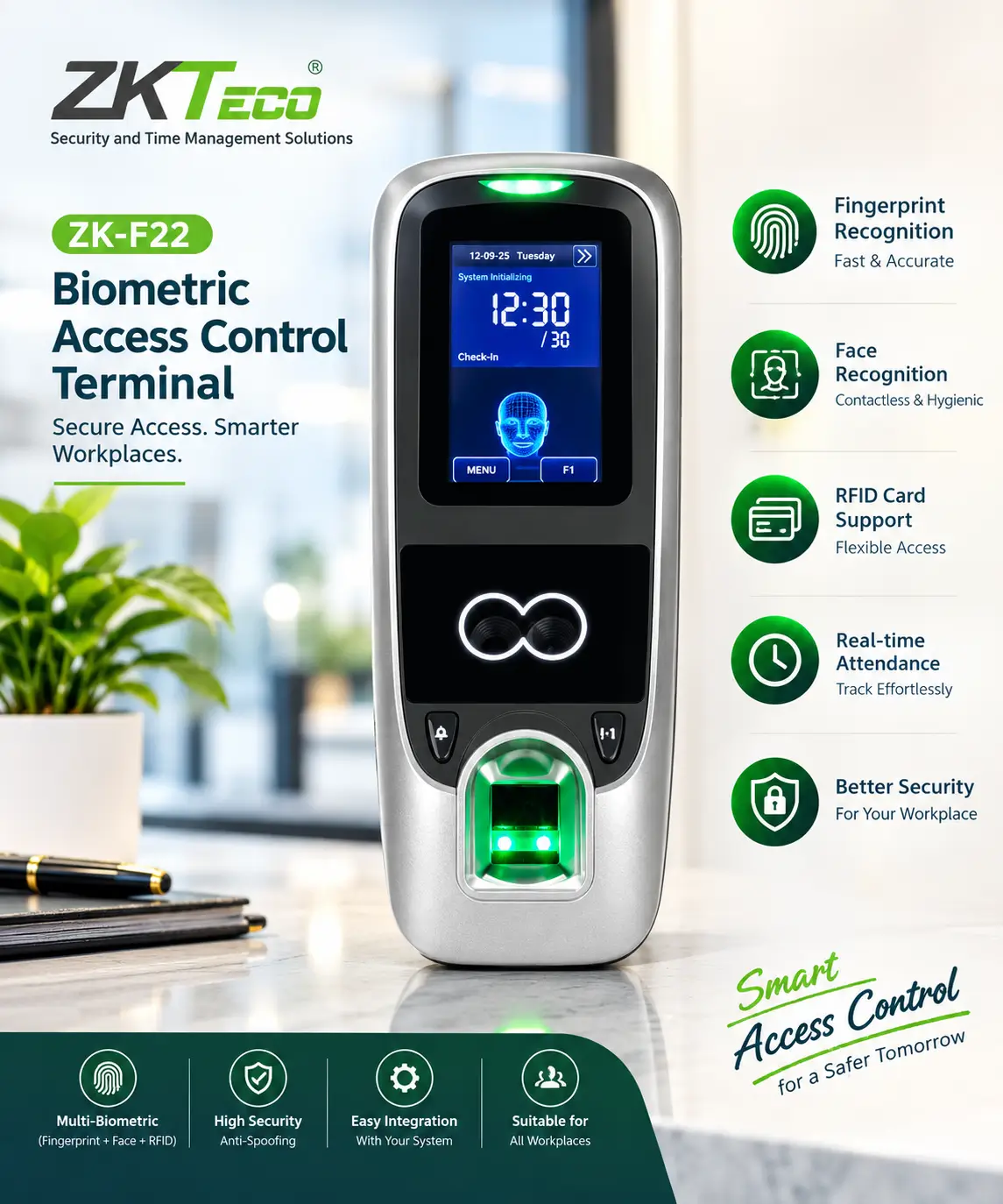
MultiBio 700
MultiBio 700 — ZKTeco multi-biometric attendance & access terminal.
- Face Capacity5,000
- Fingerprint Capacity5,000
- Card Capacity10,000
- Log Capacity100,000
- AuthFaceFingerprintCard+1
- Wi-Fi · LAN · TCP/IP · USB · Wiegand
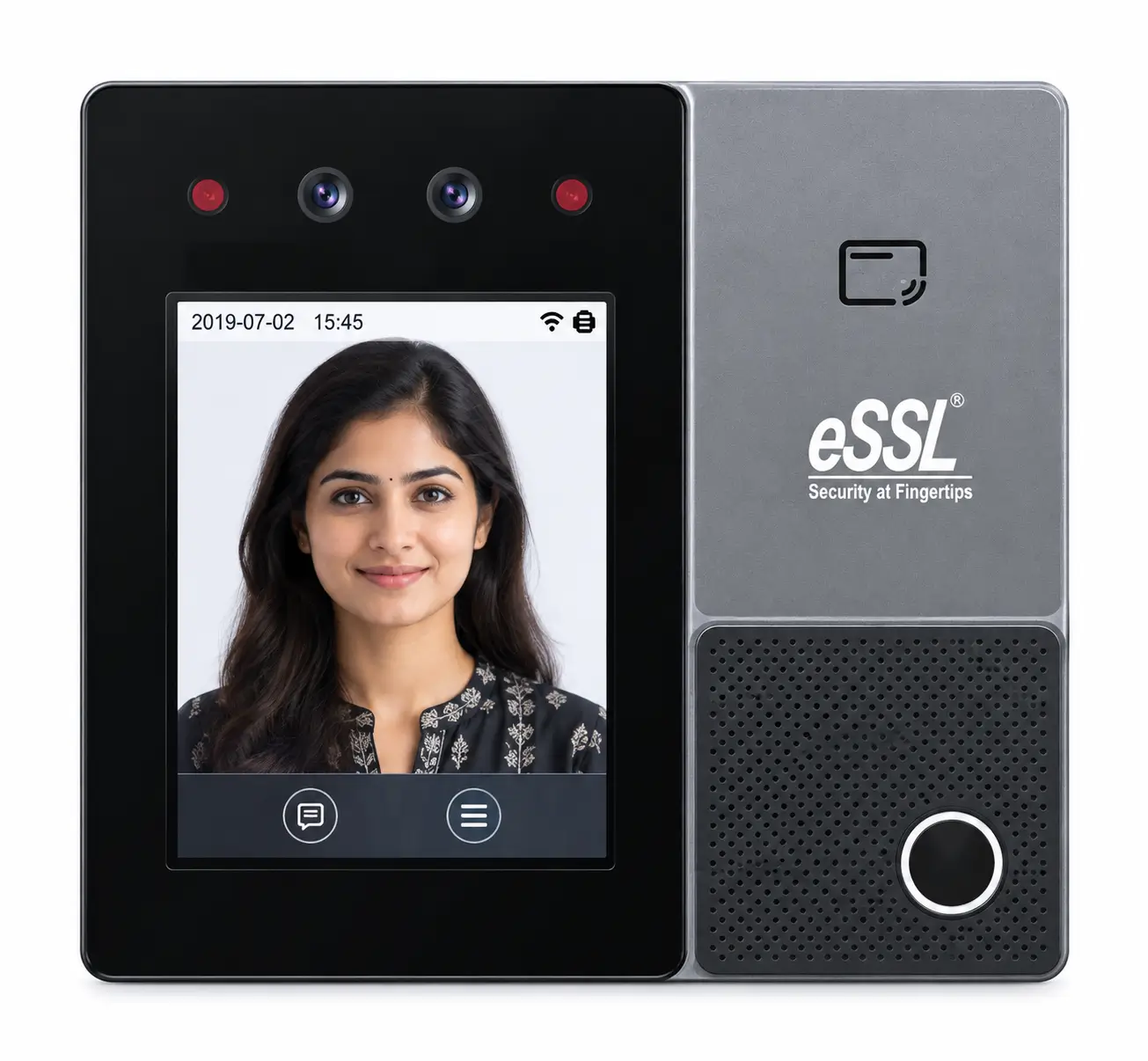
MU-AI-9
MU-AI-9 — eSSL multi-biometric attendance & access terminal (face + fingerprint + card).
- Face Capacity30,000
- Log Capacity500,000
- AuthFaceFingerprintCard+1
- Wi-Fi · LAN · TCP/IP · USB · Wiegand
Keep Reading — Biometric vs RFID Attendance: Which One Is Better?
How Does a Biometric Attendance Machine Work?
Feb 10, 2025 · 12 min read
Biometric Software vs Attendance Mobile App: Which Do You Actually Need?
Aug 11, 2026 · 8 min read
Cloud Attendance System in India: Benefits, Security & When to Choose It
Aug 5, 2026 · 8 min read
Face vs Fingerprint Attendance Machine: Which Is Better?
Jan 10, 2025 · 12 min read