HR Software for Government & PSU: Compliance, Aadhaar Attendance & On-Premise
Government and PSU organisations need HR software that is on-premise, audit-heavy and Aadhaar-ready. Here is what to look for — and how it differs from enterprise HRMS.

Key takeaways
- Government and PSU organisations need HR software that is on-premise, audit-heavy and Aadhaar-ready. Here is what to look for — and how it differs from enter…
- Government & PSU HR Is a Different Problem
- The Five Non-Negotiables for Government & PSU
- How PSU HR Software Differs from Enterprise HRMS
- Buying Checkpoints
HR software for government and PSU buyers is a partner decision before it is a product decision.
Government & PSU HR Is a Different Problem
Buying HR software for a government department or a public sector undertaking (PSU) is not the same purchasing exercise as equipping a private company. The constraints are stiffer, the audit culture is deeper, and the timeline is measured in financial years, not quarters. If you evaluate PSU HR software with an enterprise HRMS checklist, you will pick the wrong tool.
This guide covers the requirements that actually matter in the public sector.
The Five Non-Negotiables for Government & PSU
1. On-Premise Deployment
Most government and PSU buyers cannot put employee and payroll data on a vendor cloud. Data sovereignty and security policies require that records stay inside their own infrastructure. The HR software must deploy on your servers, behind your firewall, and keep working through a disconnected network day.
2. Aadhaar-Enabled Attendance
Attendance for government staff increasingly relies on UIDAI/STQC certified Aadhaar-enabled devices, and the software must integrate with them cleanly. This is not the same as fingerprint-only commercial attendance - the reporting and authentication layer follows UIDAI rules.
3. Deep Audit Trails
Every attendance change, payroll run, leave grant and data edit must be traceable to an operator and a timestamp. Public sector audit wings will ask "who did this, and when" - the software must answer without a custom report request.
4. Grade-Pay & Government Payroll
Government payroll follows grade pay, pay bands, increments and allowances that differ from private salary structures. The software must support these structures and statutory reports - PF, pension contributions, income tax - relevant to public payroll.
5. Statutory & Reporting Depth
The finance wing needs the full statutory reporting set: payslips, PF, pension, TDS, and the periodic returns expected from public institutions. Everything must come from one controlled payroll run.
How PSU HR Software Differs from Enterprise HRMS
| Requirement | Enterprise HRMS | Government / PSU |
|---|---|---|
| Deployment | Cloud-first | On-premise, behind firewall |
| Attendance | Finger/face RFID | Aadhaar-certified devices |
| Audit | Standard logs | Deep operator-level trails |
| Payroll | Market salary structures | Grade pay, pay bands, increments |
| Internet | Required for cloud | Must run offline |
Buying Checkpoints
- [ ] Demo the software on YOUR own server, not a vendor demo cloud
- [ ] Confirm Aadhaar device integration with a live device
- [ ] Ask who can see the audit log - and that it cannot be edited
- [ ] Verify grade-pay and pay-band payroll support
- [ ] Check offline operation for sites with intermittent connectivity
- [ ] Ask for reference deployments at other government / PSU bodies
Why On-Premise Costs More (and Why That Is Fine)
The higher upfront cost of on-premise PSU HR software buys data control, a deployment inside your security perimeter, and no recurring per-seat cloud fee forever. Over a five-year cycle it is often comparable to cloud - and it meets the security mandate that cloud cannot.
Bottom Line
Government and PSU organisations should not adapt a commercial HRMS to fit - they should choose software built with public-sector rules baked in. On-premise, Aadhaar-ready, audit-heavy and grade-pay-capable.
MegaMind HRMS deploys on-premise, integrates UIDAI/STQC certified Aadhaar attendance devices, keeps full audit trails and runs statutory government payroll. Talk to us about a server-side proof of concept.
For the product side of this, see our PSU HRMS, or ask for a site survey before you compare quotes.
The Two-Week Meeting That Decides Everything
Ask anyone who has run a PSU payroll project and you will hear about the two-week meeting - the one where every department sends a representative, each with a policy variation from the manual, and the software's vendor slowly realises the "standard" product does not fit. Government and PSU payroll lives on circulars: DA revisions, HRA formulas, NPS vs GPF streams, leave encashment rules that differ by cadre.
That meeting is the project. A vendor who sits through it, notes every exception, and configures the system to match - that vendor will succeed. A vendor who keeps saying "we will handle it later" is handing you a two-year reconciliation project. The buying decision for government HR is not a product decision; it is a partner decision, and the meeting reveals the partner.
Want the short version of every guide like this?
Get practical buying tips, product comparisons and security advice — plus a free consultation when you're ready to compare options.
Related Products — HR Software for Government & PSU: Compliance, Aadhaar
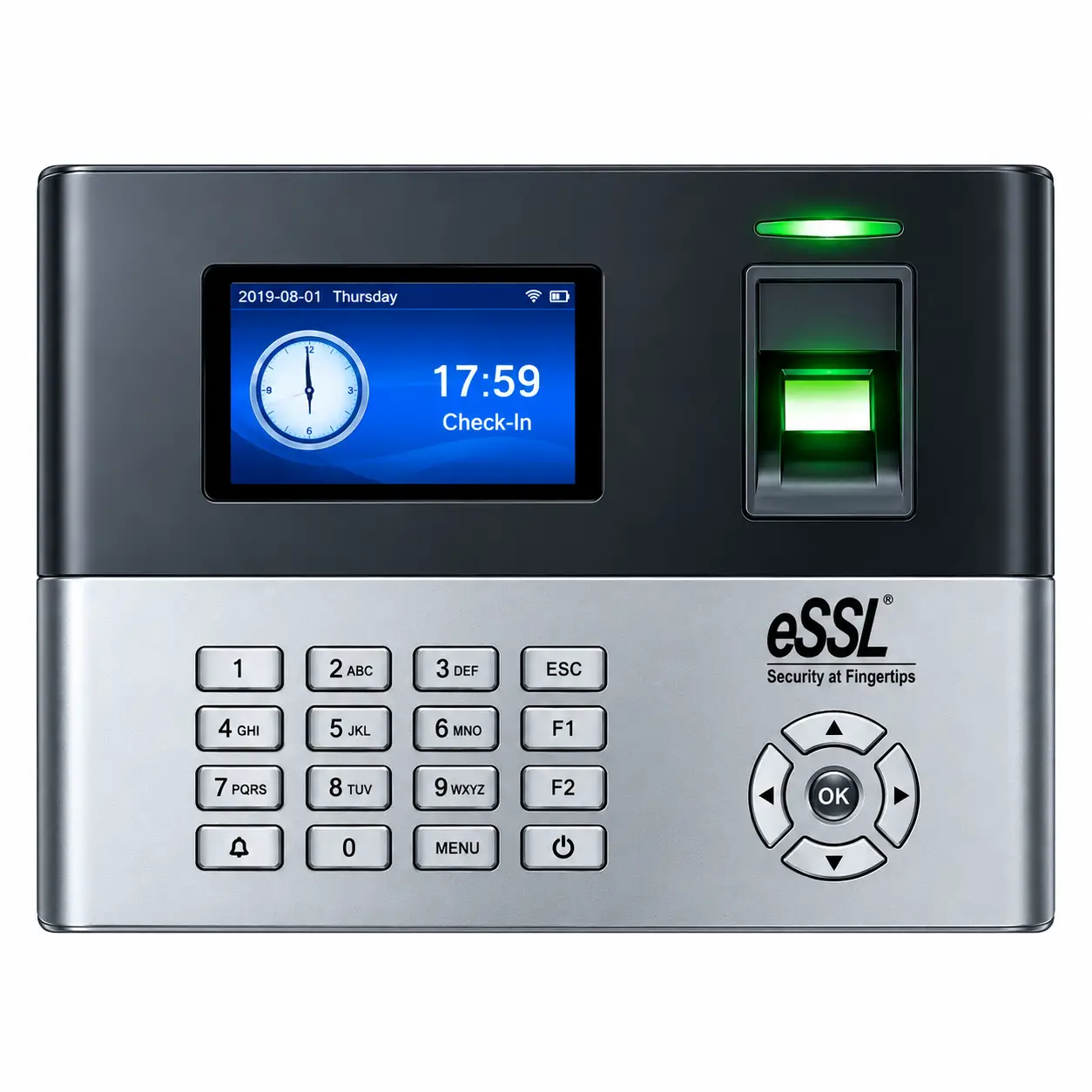
X990
eSSL X990 is a standalone fingerprint time attendance and access control system for employee attendance and controlled entry, with up to 10,000 fingerprints, 10,000 cards and 100,000 transactions, a 500 DPI optical fingerprint sensor and identification speed below 0.5 second
- Fingerprint Capacity10,000
- Card Capacity10,000
- Log Capacity100,000
- AuthFingerprintCard
- Wi-Fi · TCP/IP · USB · Wiegand

LX16
ZKTeco LX16 — a fingerprint attendance terminal, supplied, installed and supported by MegaMind Technosoft across India.
- Fingerprint Capacity3,000
- Log Capacity100,000
- AuthFingerprintCardPIN
- LAN · TCP/IP · USB