HR Software for Hospitals & Healthcare: Night Shifts, Credentials & Staffing
Hospitals run 24x7 on rostered clinical staff whose credentials, shift patterns and duty cycles demand HR software built for the sector, not generic office tools.

Key takeaways
- Hospitals run 24x7 on rostered clinical staff whose credentials, shift patterns and duty cycles demand HR software built for the sector, not generic office t…
- Healthcare HR Is Not Office HR
- 1. 24x7 Shift & Duty Rostering
- 2. Credential & Licence Tracking
- 3. Ward-Wise & Department Staffing
HR software for hospitals and healthcare must survive the ward clerk's real day, not just the demo.
Healthcare HR Is Not Office HR
A hospital never closes. Patients need care at 2 a.m., on Sundays and through holidays, which means doctors, nurses, technicians and support staff work 24x7 on rosters that look nothing like a nine-to-five schedule. If you run hospital HR on a generic office attendance tool, the night shift is where it falls apart.
This guide covers the four things HR software for hospitals and healthcare must handle.
1. 24x7 Shift & Duty Rostering
Hospitals are organised around duty rosters, not fixed shifts. Nurses rotate across day, night and general duties; doctors cover on-call and OPD slots; technicians cover emergency rotations. The HR software must: - Build long-cycle rosters that repeat predictably - Let staff see upcoming duties in the ESS portal - Support duty swaps that the department head approves - Handle on-call and overtime rules specific to clinical shifts
When a night duty is rostered, attendance rules must match it - a nurse starting at 8 p.m. should never be flagged for a 9 a.m. shift.
2. Credential & Licence Tracking
Clinical staff carry licences, registrations and certifications that expire - a doctor's registration, a nurse's licence, a technician's training certificate. A gap is an audit finding and, worse, an operational risk. Healthcare HR software should: - Store each credential with its expiry date - Alert HR in advance of expiry - Block (or flag) assignments for staff whose credential lapses
The cost of a lapsed credential discovered during an NABH or JCI audit is far higher than the software that prevents it.
3. Ward-Wise & Department Staffing
Hospitals need to see who is on duty per ward, department and floor at any moment. The HRMS should give a live duty view - how many nurses are covered in the ICU tonight, who is on leave on the cardiology ward - so the nursing superintendent can staff to the census, not guess.
4. Compliant Payroll for Clinical Structures
Hospital payroll mixes monthly-salary consultants, shift-based nurses, casual orderlies and on-call doctors. Payroll must handle night-shift differentials, overtime, statutory PF/ESI where applicable and duty-based allowances - all from verified attendance records.
Why Generic HRMS Falls Short
An office HRMS simply cannot express a 7-day-on / 7-day-off nursing cycle, an on-call doctor's availability, or a credential that gates a duty assignment. Healthcare teams end up running these in side spreadsheets - which is exactly where audit risk hides.
Buying Checklist for Healthcare
- [ ] Long-cycle roster rotation (nights, weekends, holidays)
- [ ] Credential and licence tracking with expiry alerts
- [ ] Ward/department live duty view
- [ ] On-call and night-shift payroll rules
- [ ] Duty swap and approval workflow
- [ ] Mobile ESS so staff see duties from anywhere
Bottom Line
Hospitals need HR software built for clinical reality: 24x7 rosters, credential tracking, ward staffing and duty-based payroll. The right tool keeps clinical staff compliant, rested and rostered - and keeps the auditor satisfied.
MegaMind Attendance and HRMS handle long-cycle rosters, ESS duty views and healthcare payroll structures. Ask for a hospital-specific walkthrough.
For the product side of this, see our hospital HRMS, or ask for a site survey before you compare quotes.
Why Hospitals Quietly Go Back to Paper
Ask any nursing superintendent why shift software gets abandoned in a hospital and you will hear one answer: the roster cannot have a second row for someone pulled to another ward at 6 PM. A hospital's staffing is a live negotiation - staff are moved, swapped and seconded more in one evening than a factory sees in a month - and software that makes that process slower than a paper chart loses.
The systems that survive in hospitals have one feature in common: emergency overrides and instant roster edits by authorised staff. Not "planning" that must be locked, but a schedule that can absorb the real day. If you are evaluating hospital HR software, test the "middle of a night shift" scenario in the demo - can the nursing supervisor genuinely change coverage without a spreadsheet-aside? That single test predicts adoption better than any feature list.
The Ward Clerk's Real Day
The hospital HR system that survives contact with reality is the one that survives the ward clerk's day. Her morning is a stream of changes: a staff nurse called in sick at 6 AM, an attendant moves to another ward by 10, OT needs approving before the shift end, and the night roster somehow needs one more person by 7 PM. If every one of those changes needs a ticket to a central HR office, the system loses - the clerk will use WhatsApp with the clinical coordinator and the software becomes a report generator for later.
The winning hospital implementation gives the ward clerk controlled, real-time authority: swap, move, mark short-staffed, note the OT, all within the same record the payroll reads. Grant that authority carefully - audit every change, approve large ones - but grant it. A hospital running on waiting-room speed is not running on software at all.
Want the short version of every guide like this?
Get practical buying tips, product comparisons and security advice — plus a free consultation when you're ready to compare options.
Related Products — HR Software for Hospitals & Healthcare: Night Shifts

LX16
ZKTeco LX16 — a fingerprint attendance terminal, supplied, installed and supported by MegaMind Technosoft across India.
- Fingerprint Capacity3,000
- Log Capacity100,000
- AuthFingerprintCardPIN
- LAN · TCP/IP · USB
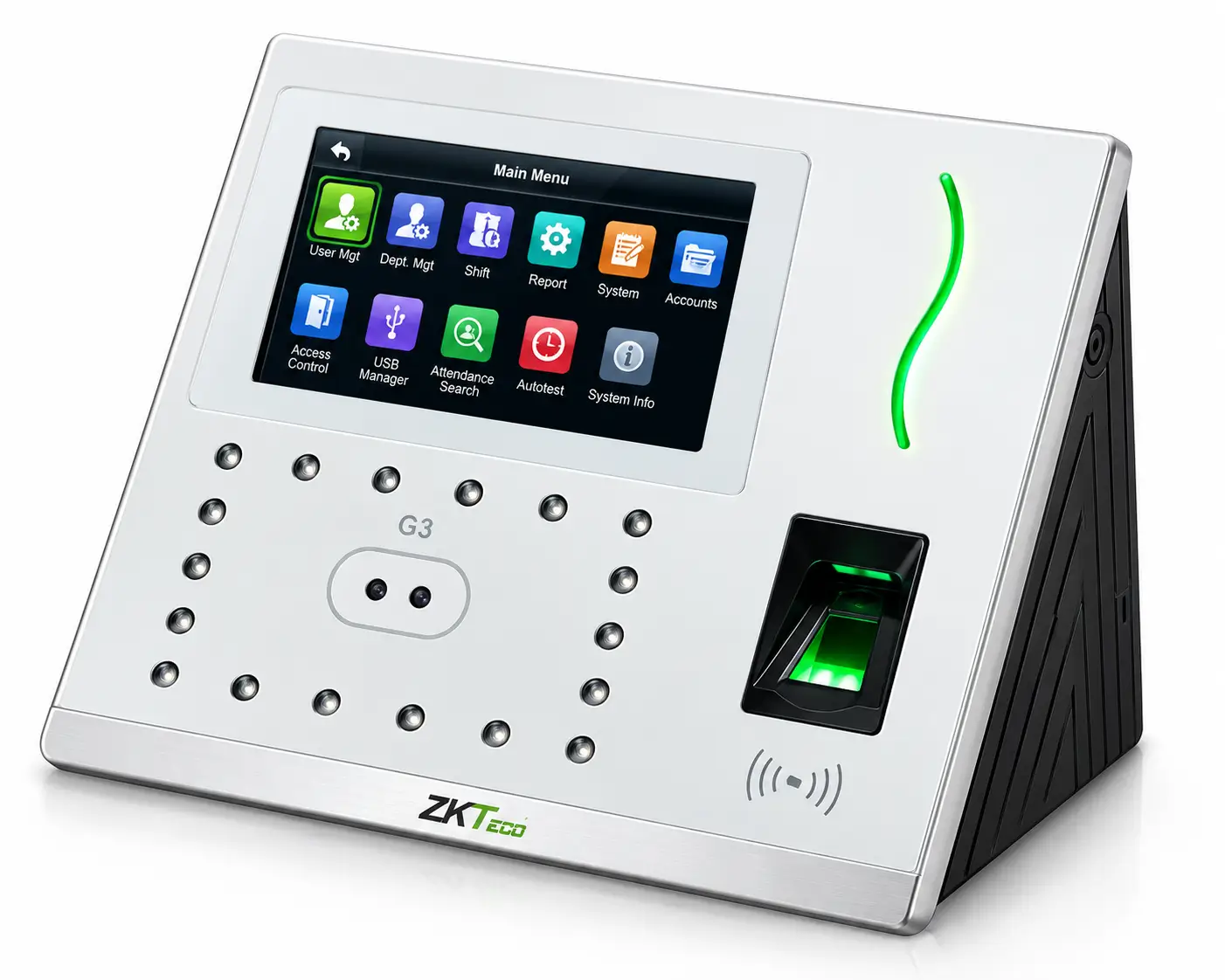
G3
ZKTeco G3 — a face recognition attendance terminal, supplied, installed and supported by MegaMind Technosoft across India.
- Face Capacity10,000
- Fingerprint Capacity10,000
- Card Capacity10,000
- Log Capacity200,000
- AuthFaceFingerprintCard+1
- Wi-Fi · LAN · TCP/IP · USB