HRMS for Manufacturing & Factories: Shifts, OT, Piece-Rate and Payroll
Factory HR runs on rotating shifts, overtime and piece-rate wages. Here is why generic HRMS falls short and what workshop-grade attendance + payroll must include.

Key takeaways
- Factory HR runs on rotating shifts, overtime and piece-rate wages. Here is why generic HRMS falls short and what workshop-grade attendance + payroll must inc…
- Factories Do Not Fit the Office HRMS Template
- 1. Rotating Shift & Roster Management
- 2. Overtime Rules That Match Labour Practice
- 3. Piece-Rate & Daily-Wage Payroll
HRMS for manufacturing and factories is built around shifts, OT rules and a labour inspector's register.
Factories Do Not Fit the Office HRMS Template
Try to run a three-shift factory on an office attendance tool and you will find out fast where it breaks: the shift that ends at 2 a.m., the worker on piece-rate whose pay depends on output, the overtime that must be paid differently on weekly off. Generic HRMS software assumes a nine-to-five, monthly-salary workforce. Manufacturing does not work that way.
A workshop-grade HRMS for manufacturing is built around the rhythm of the factory floor. Here is what that actually means.
1. Rotating Shift & Roster Management
Factories run early, general and night shifts, and the roster rotates. The HR software must let the production planner publish shift calendars per department, let supervisors assign or request swaps, and let workers see their upcoming shifts in the ESS app. Shift change automatically updates attendance rules - nobody should be marked late for a shift they were rostered onto.
2. Overtime Rules That Match Labour Practice
Overtime is not a flat multiplier. Indian factories pay differently for night shifts, weekly off and national holidays, and some states cap monthly OT hours. The payroll engine must apply the right rule per worker per day, compute eligible OT from actual punches, and keep it auditable.
3. Piece-Rate & Daily-Wage Payroll
Alongside monthly-salary staff, a factory carries daily-wage, casual and piece-rate workers whose pay depends on units produced or days attended. The HRMS must compute these structures from real attendance and production data, apply statutory contributions where due, and generate payslips for everyone - not just the permanent payroll.
4. Attendance Across the Floor
Factory attendance has to be fast and rugged: punch in, walk to the line. That means durable biometric terminals at entry points, mobile geo-attendance for multi-building or construction-adjacent sites, and no queuing at month-end to manually log hours.
5. Labour Compliance & Audit
Factories sit under the most compliance scrutiny in Indian employment - PF, ESI, contractor labour, working-hours limits and welfare requirements. The HRMS keeps attendance and payroll records aligned so a labour inspection or audit tells one story, not three spreadsheets against each other.
What to Ask Every Vendor
- [ ] Show 3-shift roster rotation working live
- [ ] Walk through night-shift and weekly-off OT calculation
- [ ] Demonstrate piece-rate and daily-wage payroll side by side with monthly pay
- [ ] Confirm PF and ESI apply correctly for mixed workforce types
- [ ] Ask how fast a 2,000-worker month-end run completes
- [ ] Check that production data can feed payroll (for piece-rate)
The Cost of Getting It Wrong
Choosing an office HRMS for a factory means manual OT rework, payroll disputes, compliance exposure and a payroll team that never leaves the office at month-end. The right software pays for itself in the first few payroll cycles.
Bottom Line
Manufacturing HRMS is a different product category. It must handle rotating shifts, overtime, piece-rate/daily-wage pay and labour compliance out of the box.
MegaMind HRMS and Attendance are used on precisely this profile - shift floors, OT rules, piece-rate payroll and multi-branch factories. See a shift-factory walkthrough.
For the product side of this, see our manufacturing HRMS, or ask for a site survey before you compare quotes.
The OT Bill Nobody Talks About
Every factory HR manager has a story about overtime. The one we hear most begins with a supervisor who approved OT verbally for years because the old system made it hard. When a labour inspector demanded three years of OT registers, the records simply did not exist. That factory did not have an HRMS problem; it had a compliance problem wearing an HRMS costume.
The lesson for any factory buyer: overtime in your system must be a rule, not a memory. Daily OT caps, weekly rest-day premiums, the shift in which the OT belongs - all of it should be computed from punches, reviewable by supervisors, and printable for an inspector in one click. If the software demos beautifully but cannot produce a clean OT register for one department, that is the gap that bites later - usually at the worst moment.
Want the short version of every guide like this?
Get practical buying tips, product comparisons and security advice — plus a free consultation when you're ready to compare options.
Related Products — HRMS for Manufacturing & Factories: Shifts, OT, Piece-Rate and

LX16
ZKTeco LX16 — a fingerprint attendance terminal, supplied, installed and supported by MegaMind Technosoft across India.
- Fingerprint Capacity3,000
- Log Capacity100,000
- AuthFingerprintCardPIN
- LAN · TCP/IP · USB
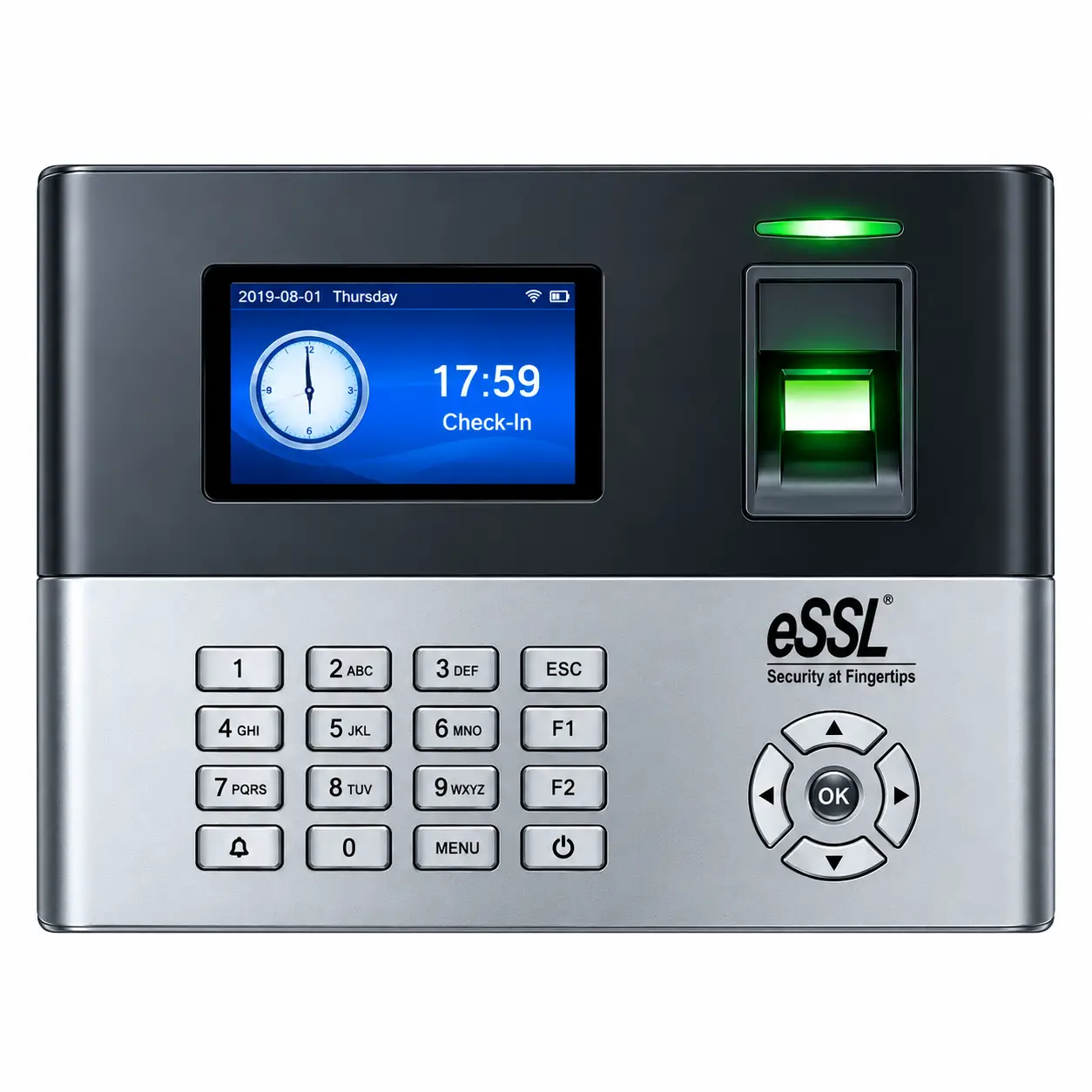
X990
eSSL X990 is a standalone fingerprint time attendance and access control system for employee attendance and controlled entry, with up to 10,000 fingerprints, 10,000 cards and 100,000 transactions, a 500 DPI optical fingerprint sensor and identification speed below 0.5 second
- Fingerprint Capacity10,000
- Card Capacity10,000
- Log Capacity100,000
- AuthFingerprintCard
- Wi-Fi · TCP/IP · USB · Wiegand