IronLung Breathing Training Station: A Practical Buying Guide for I…
IronLung pairs a 20-inch coach screen, sensor mouthpiece and smart-card profiles to turn breathwork into measured training. Sessions, buyers, throughput maths and the mistakes that waste the spend.
Quick answer
the IronLung station pairs a 20-inch smart screen with a sensor mouthpiece (temperature, pressure, humidity, altitude), a personal smart card for every user, and an ergonomic posture chair. Daily sessions run 2 to 5 minutes across 5 intensity levels, and each session ends with flow, power, endurance and quality scores plus trend reports in % and litres. MegaMind supplies and installs it across India and supports it under a 1-year warranty.

Key takeaways
- IronLung pairs a 20-inch coach screen, sensor mouthpiece and smart-card profiles to turn breathwork into measured training. Sessions, buyers, throughput math…
- Why Lung Training Belongs Next to the Treadmill
- Four Questions to Answer Before You Buy
- What the IronLung Station Actually Is
- The Five Parts, One by One
The IronLung breathing training station answers a question every Delhi winter asks: pollution is costing lung capacity, and no treadmill fixes that. Inside a South Ex gym, three members pause their warm-up to cough while the AQI board outside flashes severe. The trainer shrugs and says what trainers say every winter: the lungs will adjust.
They do not adjust. They cope, quietly, until a flight of stairs feels longer than it did last year.
That gap between coping and training is exactly what the IronLung Breathing Training Station was built to close. It is a floor-standing lung fitness machine that turns breathwork into a guided workout you can measure, with a smart card per user, a 20-inch screen showing live targets, and reports that track progress in percentage and litres. This guide explains who it suits, how a session runs, where it earns its floor space, and the mistakes that waste the spend.
Why Lung Training Belongs Next to the Treadmill
Gyms measure everything except the muscle group that powers all of it. Members track weights, steps and protein, while the diaphragm and intercostals never get a dedicated workout. Runners plateau, lifters gas out between sets, and nobody connects either problem to breathing muscles that were never trained directly.
Respiratory muscle training fixes that gap with the same logic as any strength work: controlled resistance, repeated sessions, progressive load. Peer-reviewed research backs the approach, from a University Hospital of UCD study on breathing strength to a European meta-analysis on seriously ill patients and published work on oxygen levels and walking distance. The IronLung station packages that science into a machine anyone can walk up to, tap a card on, and use without a coach standing over them.
You will feel the difference first between sets, not during them. Recovery breathing steadies, rest periods shorten, and the last two reps stop sounding ragged. That is the whole pitch: not bigger lungs overnight, but breathing muscles that quit later.
Four Questions to Answer Before You Buy
- Who will actually use it every week: athletes chasing stamina, members fighting city air, patients rebuilding after illness, or all three at different hours?
- Where will it stand: a gym floor corner, a physio room, a corporate wellness cabin, or a school sports block with supervised access?
- Who owns the hygiene routine: separate removable filters per user only work if staff enforce the swap and log it.
- Who reads the reports: a coach who adjusts programs, a clinician tracking recovery, or nobody, in which case half the value stays on the screen?
What the IronLung Station Actually Is
A floor-standing training post built by two IIT Kanpur alumni for pollution-worn lungs: display at eye level, mouthpiece on an adjustable arm, a chair that holds posture honest, a card reader that knows who just sat down, and AI-set programs that pick resistance plus duration from the profile and adjust as scores climb.
The Five Parts, One by One
Five components sound like a brochure until you price what each one replaces: a coach watching your form, a stopwatch, a posture cue, a hygiene protocol and a progress diary. Each part below gets a fair hearing, including where it strains.
1. Smart Card Profiles
Your card holds age, weight, height plus health notes, and the station loads your mode plus intensity the moment you tap. Walk to a second station and the same card brings your program with it. No typing, no shared login, no argument about whose turn left the settings changed.
Cards demand one rule: one person, one card. Lend your card to a friend for a laugh and their session lands in your trend line. Sites that issue cards at induction and reissue on loss keep clean data. Sites that keep two spare cards for guests slowly poison every graph they show management.

2. Twenty-Inch Smart Screen
Twenty inches sounds oversized until you try reading a phone timer mid-rep while breathing against resistance. Targets, levels, live progress, scores and session timers stay visible from the chair and from a coach standing two steps away. A rotary knob with Start, Stop and Reset buttons keeps operation tactile: twist, press, breathe.
Glare is the weak point. Park the screen facing a glass facade and afternoon sun wins. Turn the station side-on to windows, wipe the panel with a dry cloth, and keep liquid sanitizer away from the display edge.
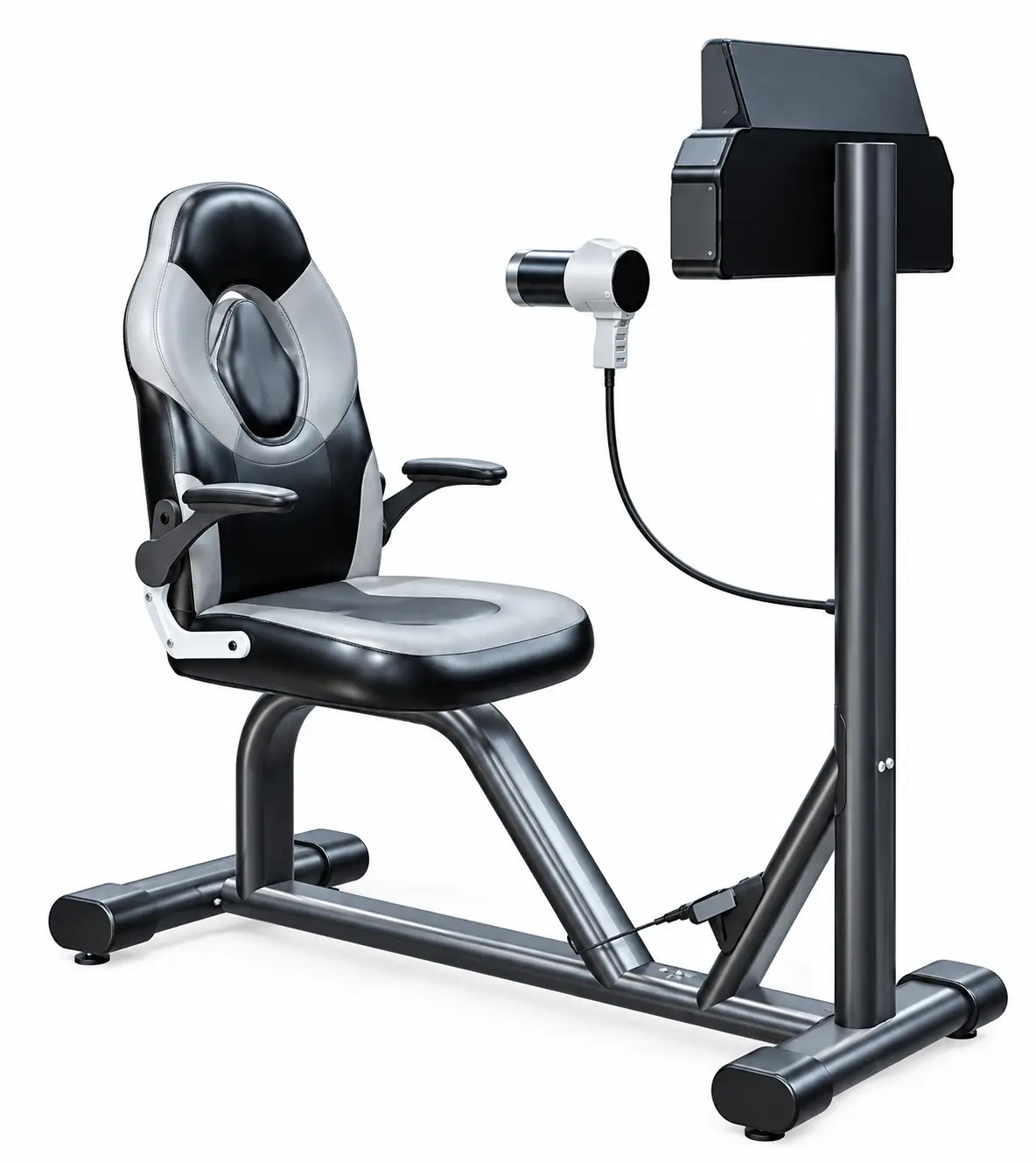
3. Sensor Mouthpiece With Personal Filters
Breathing through a tube only works if the tube trusts the room. This mouthpiece reads temperature, pressure, humidity and altitude, then compensates so a monsoon evening in Kochi and a dry January morning in Jaipur score on the same scale. Height adjustment keeps short and tall users from craning.
Hygiene rides on the personal filter: each user breathes through their own removable piece. The mechanism is sound; the failure mode is human. Busy floors skip the swap when a queue builds, and then the best filter design in the world sits unused in a drawer.
4. Posture and Comfort Chair
Breathing well starts below the ribs, so the seat holds back plus chest in an open position with relaxed shoulders and a free diaphragm. Sweat-resistant upholstery survives gym turnover, and the shape stays comfortable through longer rehab sessions too.
You still need to sit properly. Perch on the edge scrolling your phone and the chair cannot help you. Coaches who spend one minute on seating on day one get measurably cleaner first-week scores than floors that wave members straight at the mouthpiece.

5. Adaptive AI Programs
Programs draw on your card profile and live performance, setting the training mode plus intensity each day and raising the bar as your numbers improve. Sessions close with four scores: flow, power, endurance and breathing quality. Trend views track those in percentage and litres across days plus weeks, and summaries can reach your coach digitally.
Automation needs a supervisor. A member returning from flu, a patient post-procedure, or an athlete mid-peak-week should not blindly accept a harder level because the algorithm offered it. Keep program overrides with the coach or clinician, and tell users they can ask for an easier day without embarrassment.
How One Session Runs, Minute by Minute
::: side-left
 Sit, tap your card, and your profile loads on the big screen with targets and level. Breathe against the set resistance while live flow bars tell you to push or ease off; two to five minutes later four scores land for flow, power, endurance and consistency.
Who Gains the Most From It
Gyms park it near the functional corner: runners use it for stamina blocks, lifters for between-set recovery, coaches pull weekly trends from the gym software desk, and the gym industry page shows how conditioning zones are usually laid out. Corporate cabins run 2 to 5 minute lunch-break sessions with voluntary slots kept off appraisal files; the corporate wellness notes cover rollout patterns. Physios use it for supervised respiratory muscle work after surgery, session data in litres filed next to spirometry readings, with supervised-room practice in the hospital deployment notes. Schools run supervised squads on fixed slots, because open corridors turn resistance levels into dares for unsupervised juniors; see the school deployment notes for supervised-access planning.
IronLung Against the Alternatives
| Option | What you get | Where it falls short | Best fit |
|---|---|---|---|
| IronLung station | Coached screen targets, room-aware sensors, per-user cards, % plus litre trends | Needs floor space, power, a hygiene owner | Gyms, clinics, corporate cabins, academies |
| Handheld resistance breath trainers | Cheap, pocketable, adjustable valves | No coaching, no tracking, technique drifts | Solo users who already train daily |
| Breathing apps and wearables | Guided pacing, streak reminders | No resistance load, no muscle overload | Habit building at home |
| Hospital spirometers | Accurate single-measure lung volumes | Measures, does not train; clinical setting only | Diagnosis and periodic checks |
| Unsupervised pranayama alone | Free, calming, culturally familiar | No load progression, no per-user data | General wellness alongside training |
Buy the station when you need coached load plus proof across many users. Buy a handheld device when one disciplined person wants resistance at home. I would not sell the station to a single home user with no coach reading the reports, because half its price sits in multi-user tracking you would never open.
How Many People One Station Serves
Sessions run 2 to 5 minutes, and card swap plus a filter check adds roughly a minute. Call it 4 minutes per turn: about 14 sessions per hour per station, or 10 per hour with a coach supervising posture between turns. Queues kill breathwork faster than any spec gap, so size the rota for the busiest hour and add the buffer before opening day.
Run the maths for your peak hour, not your total membership. A gym with 40 evening members where 12 want the station needs one machine and a 30-minute window. A corporate cabin with 60 lunch-break users needs staggered slots across two hours or a second station. A physio clinic seeing 8 respiratory patients a day fits them between appointments on a single unit.
Specs That Decide the Purchase
Display and controls: a 20-inch live display plus rotary knob with Start, Stop and Reset. Shared equipment lives or dies on its first 30 seconds, so confirm the screen stays readable from the chair and from two steps behind, where coaches stand. Sensors and compensation: temperature, pressure, humidity and altitude sensing that keeps scores comparable across seasons and cities; ask for a demo reading on your own floor. Filters and adjustability: separate removable filters per user plus a height-adjustable mouthpiece arm. Check filter price and lead time before ordering, and put quarterly filter stock in the budget, not in a panic purchase in month four.
Site Setup: Space, Power and Hygiene
A quiet corner does the job: one power point, room for the chair plus a coach standing behind, and no direct sun on the screen, because gyms lose the station in open-cardio noise where members cannot hear their own breathing cues. Mark the zone with a mat or partition.
Power planning is dull and decisive. One stable socket beats an extension strip shared with a treadmill. Book a site survey before delivery so placement, power and footfall are settled, then let the installation team level the unit and test card loading on your floor. Support continuity comes from AMC cover rather than ad-hoc calls.
What a Real Deployment Looks Like
Survey footfall at peak hours first, then take delivery with the card batch issued at induction, each card mapped to a profile on day one. Staff learn three acts: seat the user, start the session, read the four scores back in plain words.
Week one calibrates every user; week two onward, coaches review trend lines and adjust levels while clinicians file litre values beside rehab notes. Management sees participation counts and average score movement monthly. Annual AMC keeps sensors calibrated and filters flowing.
Mistakes That Waste the Spend
Buying for total membership instead of peak-hour users. A 500-member gym rarely needs more than one station. A 60-seat corporate floor with one lunch hour might need two. Size the rota, not the register.
No hygiene owner. Filters, tray, bin, swap log: four nouns, one name beside them. Shared mouthpieces without a named owner end with a drawer of unused filters and a station nobody trusts.
Nobody reads the reports. Scores nobody reviews are decoration. Assign the weekly review to a coach or clinician before installation day, and put the slot in their calendar.
Full resistance demos for visitors. Dramatic faces, useless baselines, one embarrassed walk-in who never returns. Demo at level one, explain the climb, let the numbers do the selling.
How to Read the Quotation
Compare quotes on the full stack: station hardware, delivery plus installation, card batch, opening filter stock with unit price for refills, site survey, training for two staff members, 1-year warranty terms, and AMC from year two. Two quotes differ most often on filters, training and AMC, which is exactly where ownership cost hides.
Ask for one live trial on your floor with ten mixed users before the purchase order. Enrol them, run peak-hour turns, pull a trend report, check a WhatsApp summary. Ten sessions expose more than ten brochures. Then request a quote through Get a Quote with your headcount, peak-hour users and room size written down.
Bottom Line
Lungs respond to loaded, progressive, tracked work like any other muscle group, and the IronLung station gives that work a chair, a screen and a scorecard. Answer the four opening questions honestly, rota the peak hour, name the hygiene owner, and assign the report reader. Do that and the station earns its corner within a quarter. Skip it and even good hardware gathers dust beside the treadmill.
Tell us your weekly users, peak-hour count and room type for a one-station or two-station recommendation from verified specs. The Lung Fitness category holds the current range, and the IronLung product page carries the full specification to share with your coach or clinician.
Want the short version of every guide like this?
Get practical buying tips, product comparisons and security advice — plus a free consultation when you're ready to compare options.
Related Products — IronLung Breathing Training Station: A Practical Buying Guide

IronLung Breathing Training Station(IronLung Station)
India's first smart lung fitness training station with AI-powered personalized breathing programs, 20" smart screen, smart card technology, ergonomic posture chair and real-time respiratory performance tracking.
- Auth
- Standard Connectivity
Keep Reading — IronLung Breathing Training Station: A Practical Buying Guide
Face vs Fingerprint Attendance Machine: Which Is Better?
Sep 13, 2026 · 11 min read
Single-Door vs Multi-Door Access Control: What to Choose
Sep 14, 2026 · 10 min read
How to Choose the Right Attendance Machine: 7 Things to Check
Sep 14, 2026 · 10 min read
Access Control Systems: The Complete Buyers Guide for Offices & Campuses
Sep 16, 2026 · 8 min read