Mantra MBAS30 AEBAS Attendance: A Practical Buying Guide for India
MBAS30 pairs UIDAI AEBAS certification, fingerprint plus iris plus face capture and 4G LTE for government attendance. Onboarding, uptime and tender checklist.
Quick answer
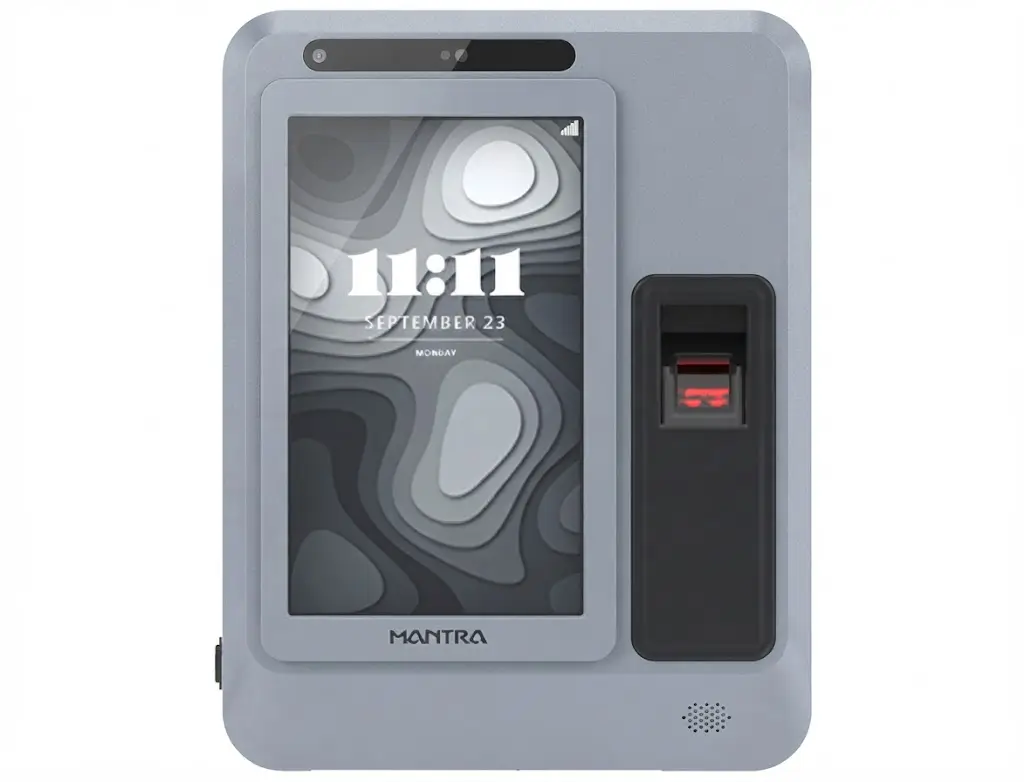
the MBAS30 pairs UIDAI AEBAS certification with a 7-inch TFT LCD (1024 by 600, 6H toughened glass), fingerprint plus iris plus 2MP face capture, Android 10 on quad-core ARM with 2GB RAM plus 32GB flash, Wi-Fi plus Ethernet plus 4G LTE plus Bluetooth, IR auto-sleep plus wake, and 1W speaker prompts. MegaMind supplies, installs and supports it pan-India with AMC.

Key takeaways
- MBAS30 pairs UIDAI AEBAS certification, fingerprint plus iris plus face capture and 4G LTE for government attendance. Onboarding, uptime and tender checklist.
- Why Government Attendance Fails at the Terminal Step
- What the MBAS30 Actually Is
- Four Questions to Answer Before You Buy
- How One Rollout Week Runs
The Mantra MBAS30 is a UIDAI-certified Aadhaar-Enabled Biometric Attendance System for government offices in India: fingerprint plus iris plus face capture, Android 10, and Wi-Fi plus Ethernet plus 4G LTE connectivity. A block office in Bihar lines up forty staff at nine in the morning, and the terminal that reads thumbs, eyes and faces keeps the queue moving while single-mode devices stall.
That gap between a terminal that authenticates and one that sustains government attendance is exactly what this guide tests. The Mantra MBAS30 suits central offices, state departments, PSUs and field administrations under AEBAS orders. This guide explains AEBAS demands, who must buy certified hardware, how rollout week runs, and the mistakes that waste the spend.
Why Government Attendance Fails at the Terminal Step
Ask any establishment officer who has managed muster-to-biometric migration and you hear the same story. The terminal authenticated beautifully in the demo, but on Monday the fingerprints of field staff failed, the wired network dropped, and the queue backed up to the gate. The device took the blame for a planning failure.
Rollout failure is about coverage, not cameras. Four gates decide AEBAS success: UIDAI certification for the framework, multi-modal capture for every staff category, multi-path connectivity for weak networks, and onboarding discipline for credentials plus training. This guide follows that order, with the MBAS30's verified numbers written down.
What the MBAS30 Actually Is
Strip the brochure and you get a wall-mounted attendance appliance that thinks like a phone: Android 10 interface on a 7-inch touch screen, three biometric paths behind one punch flow, and four network routes to the AEBAS server. Staff place a finger, look at the iris sensor, or face the camera, and attendance with Aadhaar identity reaches the server over whatever link works.
Certification is the tender gate. UIDAI AEBAS certification clears central government offices, state departments, PSUs and field administrations where generic attendance machines fail eligibility. The Mantra brand page carries the positioning, the Aadhaar range shows sibling terminals, and the official Mantra site lists the current lineup and support downloads. Everything below tests those claims against real offices.
Four Questions to Answer Before You Buy
- Does your order name AEBAS explicitly: if yes, only UIDAI-certified terminals qualify?
- What staff categories punch here: field labour with worn prints, officers, or mixed crowds needing all three modes?
- What networks reach the mounting wall: wired Ethernet, office Wi-Fi, or 4G signal with a spare SIM slot?
- Who owns onboarding: server credentials, Aadhaar seeding, and operator training before go-live week?
The Parts That Decide the Purchase
The Mantra MBAS30 earns its place at government entries through four working parts: AEBAS certification, triple-mode capture, multi-path connectivity and Android manageability. Each one below carries a verified number plus an office habit that protects it.
1. UIDAI AEBAS Certification
AEBAS certification means the terminal speaks the government's attendance protocol with Aadhaar identity behind every punch. Central offices, state departments and PSUs under AEBAS orders accept only certified terminals, and audit trails flow to the framework servers.
Orders decide everything. When the circular names AEBAS, procurement committees check certification before touching devices. Keep the certificate copy stapled to your quotation file, because the bidder who produces it late has already lost points.
2. Fingerprint Plus Iris Plus Face Capture
Three modes cover every staff category. Fingerprint handles office staff with clean prints, iris covers field labour with worn thumbs touch-free, and the 2MP face camera adds a fast path where policy allows. One terminal adapts instead of three devices crowding the wall.
Mode discipline decides queues. Train operators to route failed fingerprints to iris immediately instead of retrying five times, because one quick switch beats a backed-up lobby. For L1 fingerprint counters at banks, the MFS110 guide covers the desk sibling.
3. Wi-Fi Plus Ethernet Plus 4G LTE Uptime
Four network paths keep punches flowing where single-link terminals stall. Wired Ethernet anchors head offices, Wi-Fi covers campus buildings, 4G LTE carries block and field offices, and Bluetooth serves peripherals. IR proximity auto-sleep plus wake conserves power between punches.
Signal surveys decide SIM budgets. Test 4G strength at the exact mounting wall with the actual operator SIM before ordering, because lobby corners differ from rooftops. Keep a spare SIM from a second operator where attendance cannot wait for one network.
4. Android 10 Platform and 7-Inch Display
Android 10 on quad-core ARM with 2GB RAM plus 32GB flash runs the AEBAS app plus Hindi plus English prompts on a 7-inch 1024 by 600 screen behind 6H toughened glass. The 1W speaker talks operators through each step, which matters for first-time biometric users. For counter-grade fingerprint capture at CSC desks, the MFS100 guide covers the desk sibling.
Platform familiarity shortens training. Staff who use Android phones learn the terminal in minutes, and IT teams manage fleets with known tools. Lock the app version per rollout and test updates on one terminal before fleet-wide pushes.
How One Rollout Week Runs
Day one starts with mounting plus registration: terminal fixed at entry height, connected over the best available link, registered on the AEBAS server, and tested with ten staff across all three modes. Sites that skip mode testing discover iris failures at Monday peak instead.
Through the week, operators run parallel attendance with the old register while staff learn the flow. Failed fingerprints route to iris on second try, network drops buffer locally where supported, and supervisors reconcile daily counts against the register. At week end, the register retires and the terminal becomes the record.
Monthly, compare punctuality reports against leave records because attendance data only matters when payroll trusts it. Quarterly, audit device health across sites: screen responsiveness, sensor cleanliness and network uptime per terminal.
Who Gains the Most From It
Central and State Government Offices
Secretariats, collectorates and department headquarters under AEBAS orders need certified terminals with audit trails. The MBAS30's certification plus triple modes fit mixed staff from peons to officers. For sibling terminal options see the SAB3000 guide.
PSUs and Public-Sector Banks
Undertakings and branch networks need standardised attendance with central reporting. Android manageability plus multi-path connectivity suit campuses and branches alike. Pair terminals with attendance software for payroll-ready reports.
Field Administrations and Rural Offices
Block offices, MGNREGA cells and taluk administrations face weak networks and worn-print staff. 4G LTE plus iris capture covers both gaps where single-mode wired terminals fail. For enrolment-grade capture at citizen counters, the MFS500 guide covers the desk sibling.
MBAS30 Against the Alternatives
| Option | What you get | Where it falls short | Best fit |
|---|---|---|---|
| MBAS30 terminal | AEBAS certified, triple mode, 4G LTE, Android 10 | Tender-grade pricing, needs onboarding | Government, PSU, field offices |
| Generic fingerprint terminal | Cheap, fast install, payroll links | No Aadhaar, fails AEBAS eligibility | Private offices only |
| Manual registers | Zero hardware, familiar | Fraud-prone, no audit trail | Nowhere under AEBAS orders |
| Single-mode AEBAS box | Certified, lower price | Stalls on worn prints, one network | Small offices, clean-print staff |
Buy the Mantra MBAS30 when AEBAS orders govern attendance and staff categories vary. Stay generic only where no Aadhaar framework applies. I would not sell a generic terminal to an office under AEBAS orders, because eligibility rejection wastes the whole procurement cycle.
MBAS30 Price in India
Pricing is quote-based and moves with stock, warranty terms and quantity. Three numbers decide the real cost: terminal price with sealed-box warranty, installation plus onboarding across your sites, and AMC from year two with spare-device coverage.
Tender-grade hardware plus services beats unit-price shopping. Offices that compare only device prices discover installation, training and credential delays later. Confirm the model's exact letter plus onboarding scope in writing before comparing quotes.
How Long One MBAS30 Serves an Office
Terminal life is punches plus updates, not years on a sticker. A block office crosses two hundred punches daily across three modes, which means sensor cleaning discipline decides lifespan while app version control decides compliance. Offices that wipe sensors weekly and pilot updates on one terminal run for years.
Plan replacements around wear points in order: cleaning forever, cables plus mounts yearly, and the terminal itself for the rollout's life when both hold. A district ordering one hundred terminals should hold ten spares, because a dead entry device on Monday costs more than the spares shelf ever will.
Onboarding in Seven Steps
- Confirm the order names AEBAS and the MBAS30 model letter, then match certification in writing.
- Survey each mounting wall for power, network options and 4G signal with the actual SIM.
- Mount terminals at entry height where staff naturally pause, with cabling protected.
- Register every device on the AEBAS server and verify server-side visibility before training day.
- Seed staff Aadhaar records and test all three modes on ten staff per site.
- Run parallel attendance with the old register for one week, reconciling daily.
- Retire the register, hand over admin credentials with a logbook, and schedule quarterly health audits.
Mistakes That Waste the Spend
Buying generic for AEBAS sites. Uncertified terminals die at eligibility. Match the certificate to the order first, then compare prices.
Single-mode thinking. Offices that train only fingerprint stall on field-staff thumbs. Teach iris switching on day one, because queues remember.
Skipping signal surveys. Lobby corners differ from rooftops. Untested 4G means unpunched Mondays, so survey every wall with the real SIM.
Ignoring credential custody. Server logins stall more rollouts than hardware. Assign credential owners in writing before installation week. Book a site survey for multi-site rollouts, let the installation team mount plus register terminals, and keep AMC cover for year-two continuity.
How Many Terminals One Office Needs
Throughput is entries times peak minutes, not headcount. One entry gate with fifty staff arriving in ten minutes needs one Mantra MBAS30 terminal, while three gates need three. A 500-staff campus with two entries fields two terminals plus one spare for failures and training.
Run the maths for Monday peak, not average days. Offices that size for averages queue out the gate when everyone arrives together. Spares at one per five terminals keep attendance running when screens crack or sensors need service.
How to Read the Quotation
Compare quotes on the full stack: sealed MBAS30 terminals with serials, certificate copies, mounting plus cabling, AEBAS registration support, operator training in Hindi plus English, manufacturer warranty terms, dispatch timelines across districts, and AMC from year two. Multi-site rollouts need per-site installation scope, not lump sums.
Ask for a live demo on your own staff across all three modes before the order, then request a quote through Get a Quote with site count, staff mix and order references written down.
Bottom Line
AEBAS success rests on four legs: certified hardware, multi-modal capture, multi-path connectivity and onboarding discipline. The Mantra MBAS30 brings proven terminals for all four at government entries across India, but only rollout discipline makes them stand together. Confirm AEBAS in writing, survey every wall, train all three modes, and buy sealed.
Tell us your site count, staff mix and order references for a terminal plus onboarding quote from verified specs. The MBAS30 product page carries the full specification to share with your procurement committee.
Want the short version of every guide like this?
Get practical buying tips, product comparisons and security advice — plus a free consultation when you're ready to compare options.
Related Products — Mantra MBAS30 AEBAS Attendance: A Practical Buying Guide for
MBAS30
Mantra MBAS30 — Aadhaar-enabled biometric attendance system with 7-inch display, fingerprint + iris + face, Android 10, quad-core processor and UIDAI AEBAS certification.
- AuthFaceFingerprintIris
- Wi-Fi · LAN · TCP/IP · USB

MBAS40
Mantra MBAS40 — GMS-certified Android 14 multi-modal biometric device with 7-inch display, fingerprint + iris + face for Aadhaar-Enabled Biometric Attendance (AEBAS) compliance.
- AuthFaceFingerprintIris
- Wi-Fi · LAN · TCP/IP · USB