Real-Time & Online Time Attendance Software: Live Workforce Visibility
Real-time attendance software turns a month-end the spreadsheet exercise into a live workforce picture. Here is what real-time actually means and why it changes payroll.

Key takeaways
- Real-time attendance software turns a month-end the spreadsheet exercise into a live workforce picture. Here is what real-time actually means and why it chan…
- Attendance as a Live Signal, Not a Month-End Report
- What "Real-Time" Actually Means
- Why It Matters for Field & Multi-Site Teams
- Managing the Change
Real time attendance software in India changes one thing more than any other: who finds out first.
Attendance as a Live Signal, Not a Month-End Report
Traditional time and attendance software is essentially a batch process: punches pile up all month, then HR runs a report at month-end to discover who was repeatedly late, who vanished without approval, and reconstruct payroll from a backlog. Real-time attendance software changes the model - punches reflect instantly, and HR watches attendance the way a dashboard watches a factory line.
What "Real-Time" Actually Means
### Punches Reflected as They Happen When a face or fingerprint terminal records a punch, or a field worker checks in on the app, it appears in the system immediately - not on the next batch pull. Managers and HR read live presence across every site.
### Instant Alerts on Rule Breaches The moment someone does not punch in for their shift, or punches out early, or exceeds allowed OT, the system can raise an alert. HR and supervisors follow up the same day instead of discovering it three weeks later.
### Live Absence Management A shop-floor supervisor sees who is missing from the night roster in real time and can cover the gap - rather than only learning about it when the shift is understaffed.
### The Same Verified Records Feed Payroll Real-time visibility does not mean you lose accuracy. Every punch is still verified and rule-applied, so the month-end payroll run draws from the same clean, auditable records - you simply see them sooner.
Why It Matters for Field & Multi-Site Teams
Real-time shines most where presence is distributed: field staff, multiple branches, and remote sites. Rather than waiting for a site manager's spreadsheet, HR sees everyone's live status - who is checked in, who is at which client, who has not punched.
Managing the Change
Real-time attendance is a visibility upgrade, not a surveillance tool. The most successful rollouts frame it as fairness and coverage: "we will know who needs cover, and you will not wait days to correct a punch." Combined with self-service access to their own records, staff understand and accept it.
Buying Checklist
- [ ] Punch-to-report latency (real-time, not batch)
- [ ] Live presence dashboard across sites
- [ ] Configurable absence and OT alerts
- [ ] Biometric + mobile capture in one platform
- [ ] The same records feeding payroll accurately
- [ ] Employee self-service to view and correct own punches
Bottom Line
Real-time attendance software does not merely track - it informs. Live visibility, instant alerts and verified payroll records make attendance a signal your HR team acts on daily, not a report you reconcile monthly.
MegaMind Attendance reflects punches in real time across biometric and mobile, alerts on absences, and feeds the same verified records to payroll. See the live dashboard.
The Difference Honest Managers Notice First
Real-time attendance changes one thing more than any other: who finds out first. In a batch system, the latecomer, the early leaver and the vanished employee are all problems discovered by HR at month-end. In a real-time system, the supervisor sees the missing person at 9:05 AM and can do something about it that same morning - cover the line, call the person, document the absence while it is happening.
That shift - from history to presence - is why managers who install it never go back. Not because they want to watch people, but because running a plant, an office or a field team from yesterday's data is like driving a car by looking in the rear-view mirror.
Where It Gets Tricky (and What to Check)
Real-time only works if the pipes are real-time too. Ask these questions before you commit:
- Does my site have the connectivity to support it? A terminal that punches but only syncs once an hour is not real-time, however nice the dashboard is. Confirm the actual sync cadence on your network - not the brochure's.
- What happens when the network dies? The device must buffer punches locally and push them when the line returns. If it cannot, your "real-time" system becomes a data-recovery project every time the router hiccups.
- Who gets the alerts, and when? An alert that lands on the wrong person's phone at the wrong hour is noise, not supervision. Configure alert routing per shift and per role before go-live.
- Is it a surveillance story or a fairness story? The successful rollouts frame it as coverage and self-correction: employees can see their own punches instantly and fix mistakes the same day. That framing is the difference between staff trusting the system and staff fighting it.
The Shift Manager's Friday Afternoon
Before real-time attendance, the shift manager's Friday was a ritual: call HR, ask which workers were consistently late, get a month-end report that could not say "who on the night shift is habitually missing". The afternoon went to reconstructing history that everyone already suspected. After real-time, that same Friday became a five-minute review: open the live dashboard, see the night crew's punches, flag the pattern, speak to the person the same day.
The difference is not the dashboard - it is the timing of knowledge. In a batch system, patterns are discovered a month late, when they are anecdotes. In a real-time system, patterns are visible the day they form, when they are actionable. That single shift - from hindsight to foresight - is why supervisors who get real-time attendance genuinely do not go back.
For a direct shortcut, explore our real-time attendance software and mobile app punches - they link straight to what this guide covers.
Want the short version of every guide like this?
Get practical buying tips, product comparisons and security advice — plus a free consultation when you're ready to compare options.
Related Products — Real-Time & Online Time Attendance Software: Live Workforce

LX16
ZKTeco LX16 — a fingerprint attendance terminal, supplied, installed and supported by MegaMind Technosoft across India.
- Fingerprint Capacity3,000
- Log Capacity100,000
- AuthFingerprintCardPIN
- LAN · TCP/IP · USB
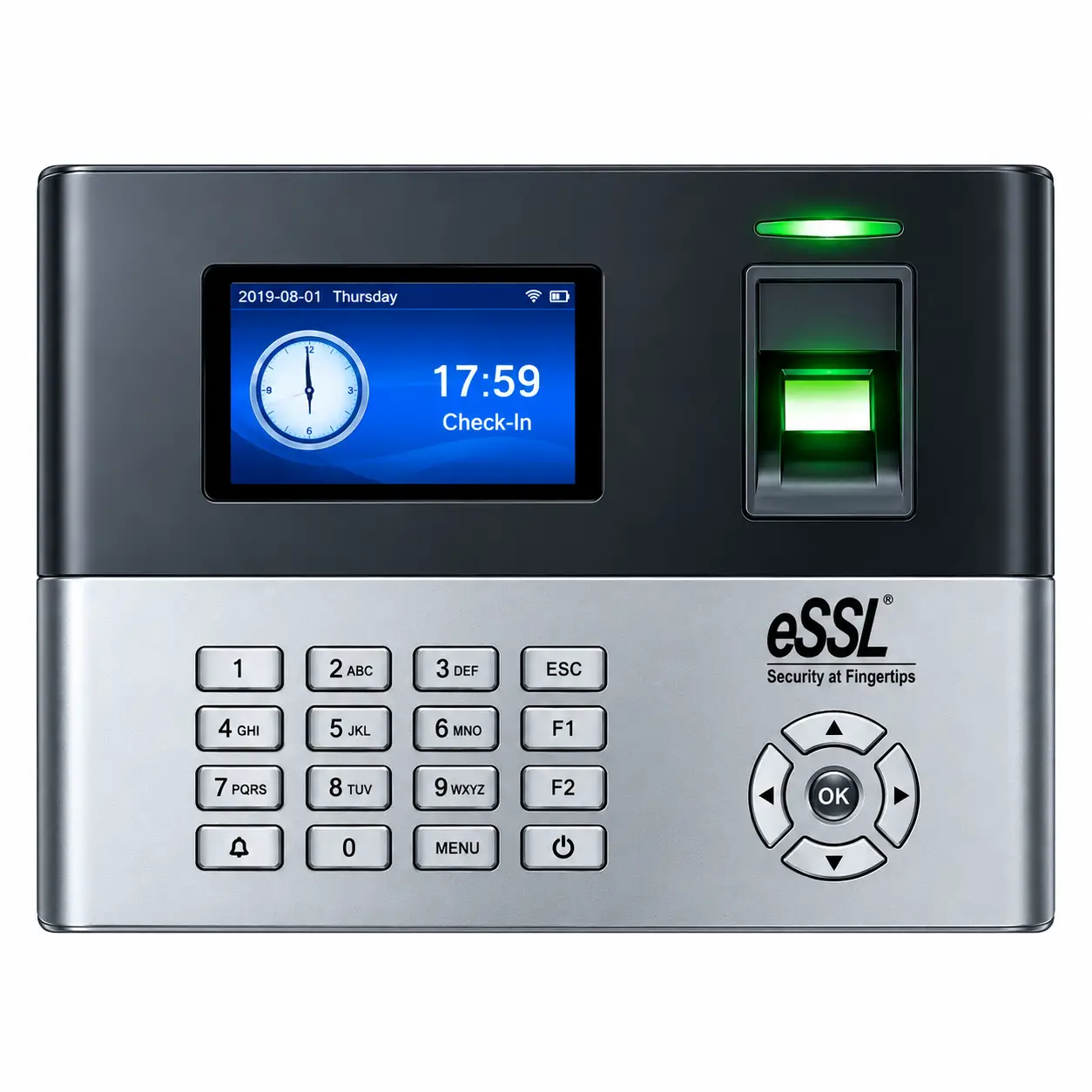
X990
eSSL X990 is a standalone fingerprint time attendance and access control system for employee attendance and controlled entry, with up to 10,000 fingerprints, 10,000 cards and 100,000 transactions, a 500 DPI optical fingerprint sensor and identification speed below 0.5 second
- Fingerprint Capacity10,000
- Card Capacity10,000
- Log Capacity100,000
- AuthFingerprintCard
- Wi-Fi · TCP/IP · USB · Wiegand